Published on November 20, 2025
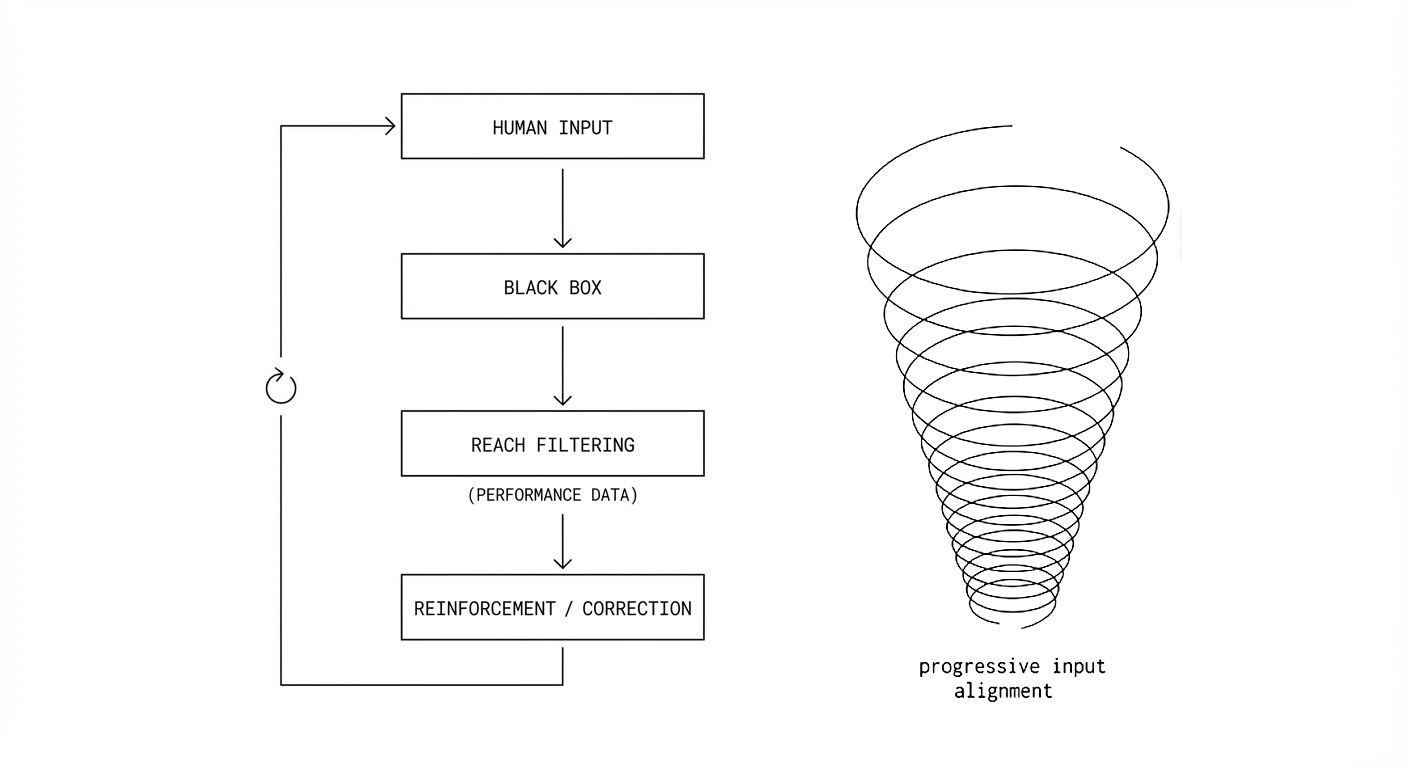
Networked interaction is, at its core, a data transaction. The user seeks visibility or validation; the platform seeks attention time. Between these two intentions operates an adaptive filter — the algorithm — which determines the reach of the message.
This system imposes an incentive structure: it defines syntax, frequency, and format. An artificial cultural selection occurs. The creator adjusts the content (the input) to maximize the metric (the output). The system interprets and processes retention signals.
The process forms a closed-loop control apparatus:
1. Zero-Friction Architecture
The efficiency of the system depends on removing latency between impulse and action. Interface design is configured to eliminate natural stopping points, preventing deliberate decision-making.
The central mechanism is forced continuity. The system’s default state is playback, not pause.
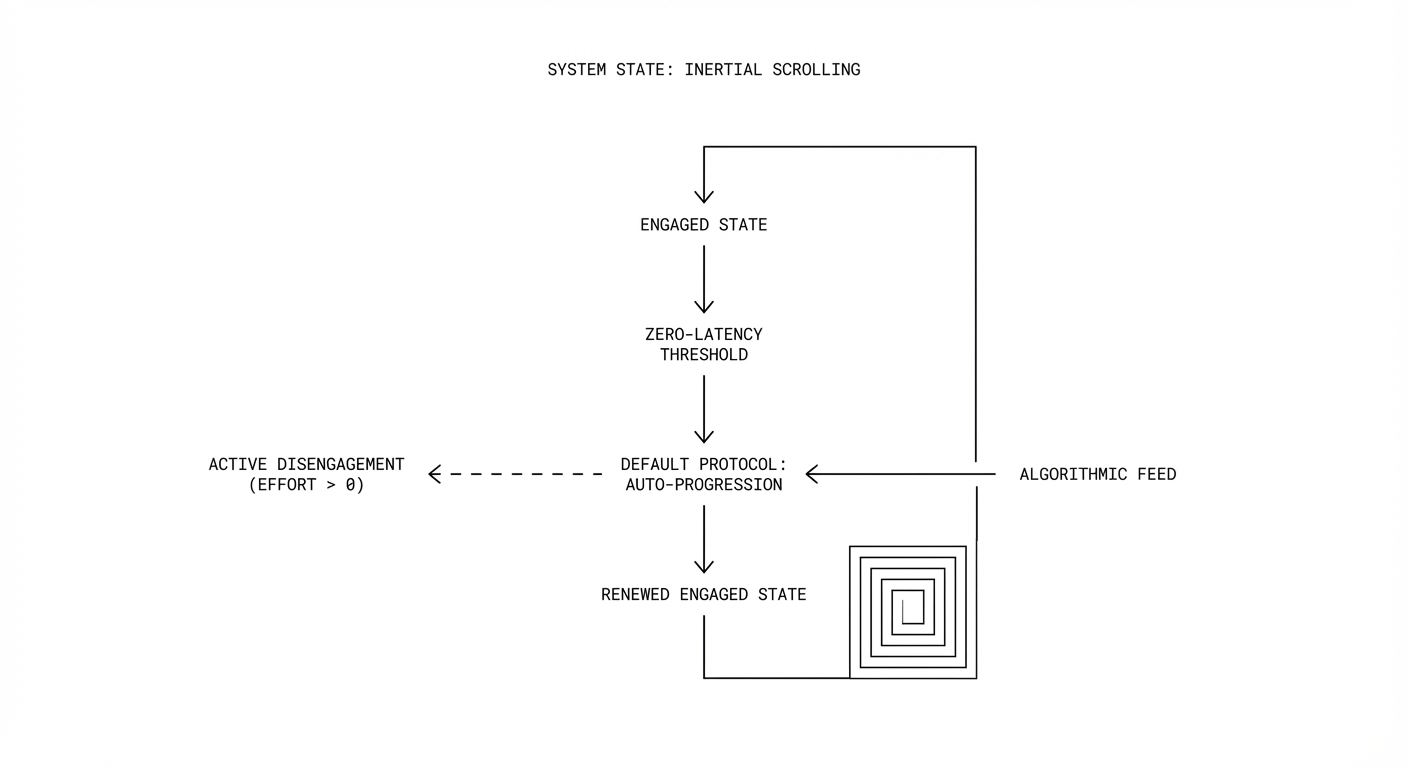
The choice architecture is asymmetric: entry into the flow is immediate; exit requires complex navigation or manual actions. The system exploits the human tendency toward behavioral inertia.
2. Variance Engineering
Retention is not maintained through satisfaction, but through unpredictability. The system applies intermittent reinforcement schedules. If the reward (social validation, novelty) were constant, habituation, and disengagement would occur. Variability prevents adaptation.
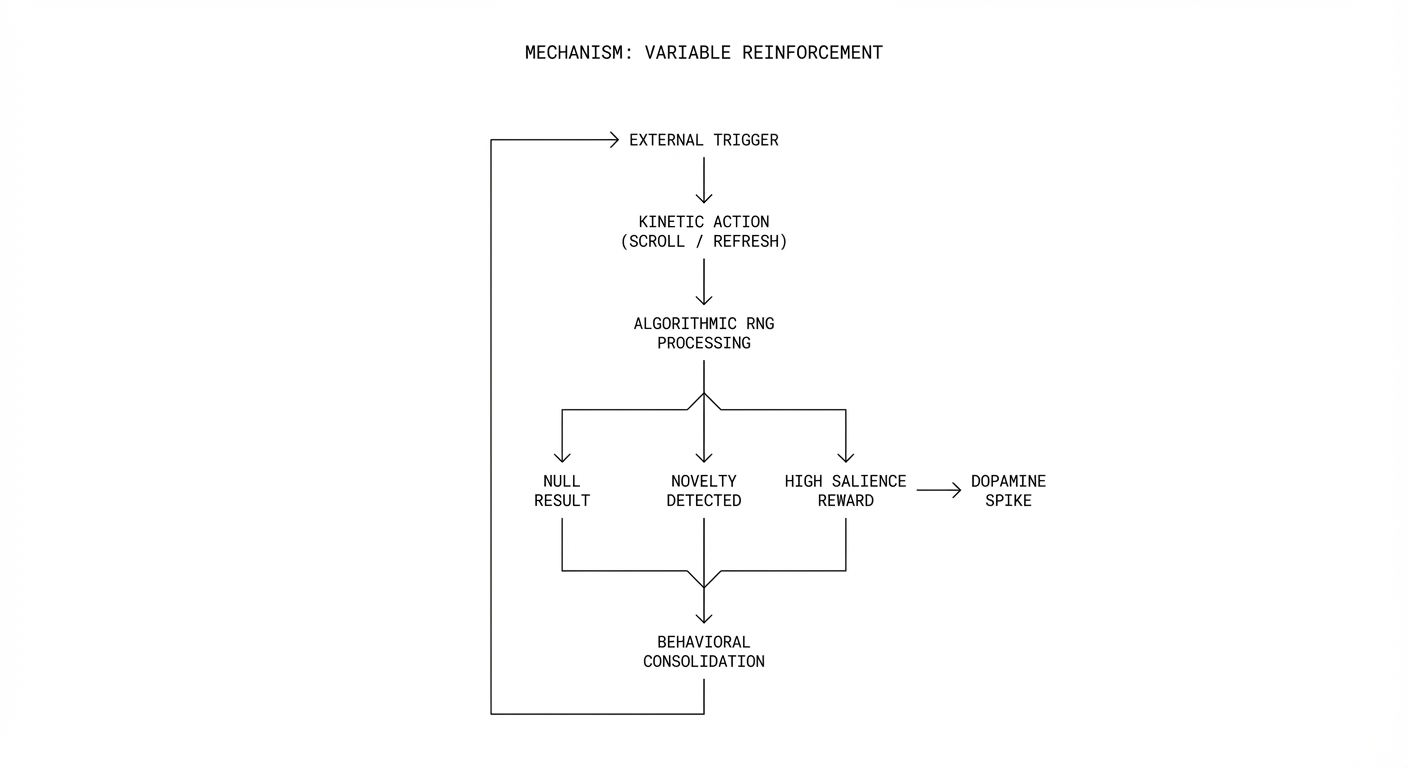
The biological mechanism exploited is the Reward Prediction Error. The dopaminergic system is activated not by the reward itself, but by the discrepancy between expectation and outcome.
The design uses micro-stimuli (vibrations, counters, saturated colors) to keep the nervous system in a state of hyper-arousal, inducing cyclic checking regardless of the presence of real content.
3. Extraction and Modification
The scarcity of attention is a by-product of system architecture. The economic model is based on extracting behavioral data to feed prediction markets.
The operative concept is Behavioral Modification. Platforms do not merely sell access to the user; they sell the statistical probability of altering a future action (purchase, vote, watch time).
The architecture converts attention (a finite biological resource) into data (a digital and tradable asset).
4. Cognitive Ecology and the “Dividual”
The system does not interact with the complete individual, but with fragments of behavior. The subject is processed as a “Dividual” — a set of disaggregated data points and response vectors.
The algorithm segments the user into reaction clusters:
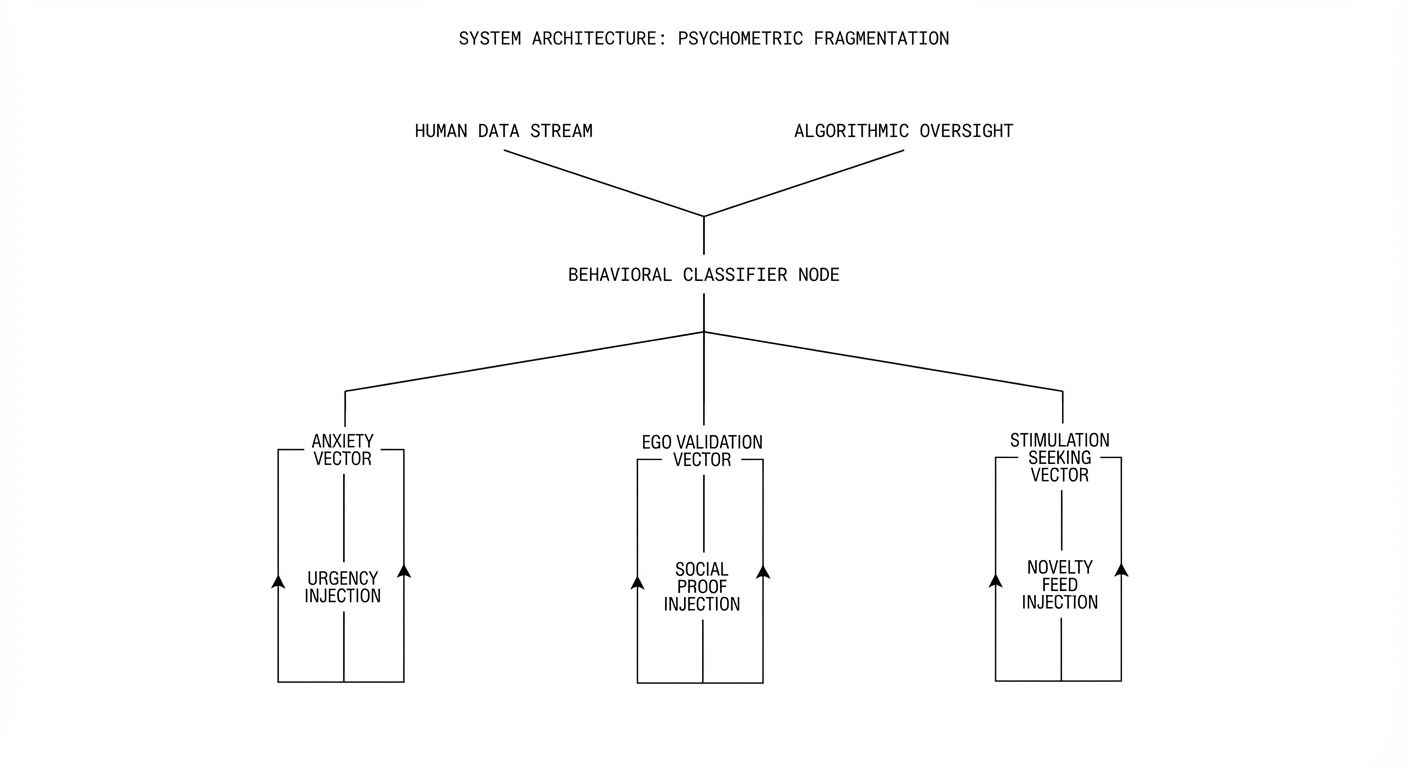
This approach bypasses the coherence of personal identity, directly stimulating specific vulnerabilities (fear, ego, curiosity) in an isolated and automated manner.
5. Network Dynamics: Excitation-Optimized Selection
To maximize time on platform, algorithms privilege stimuli that induce high physiological arousal. There is systematic selection for dissonant or polarizing content, as it generates faster and more frequent motor responses (clicks, comments) than neutral content.
Systemic Effects:
- Group Polarization: Clustering of similar profiles and gradual exposure to extreme content (escalation spiral).
- Reactive Virality: Divisive content spreads faster because it activates defense or attack mechanisms.
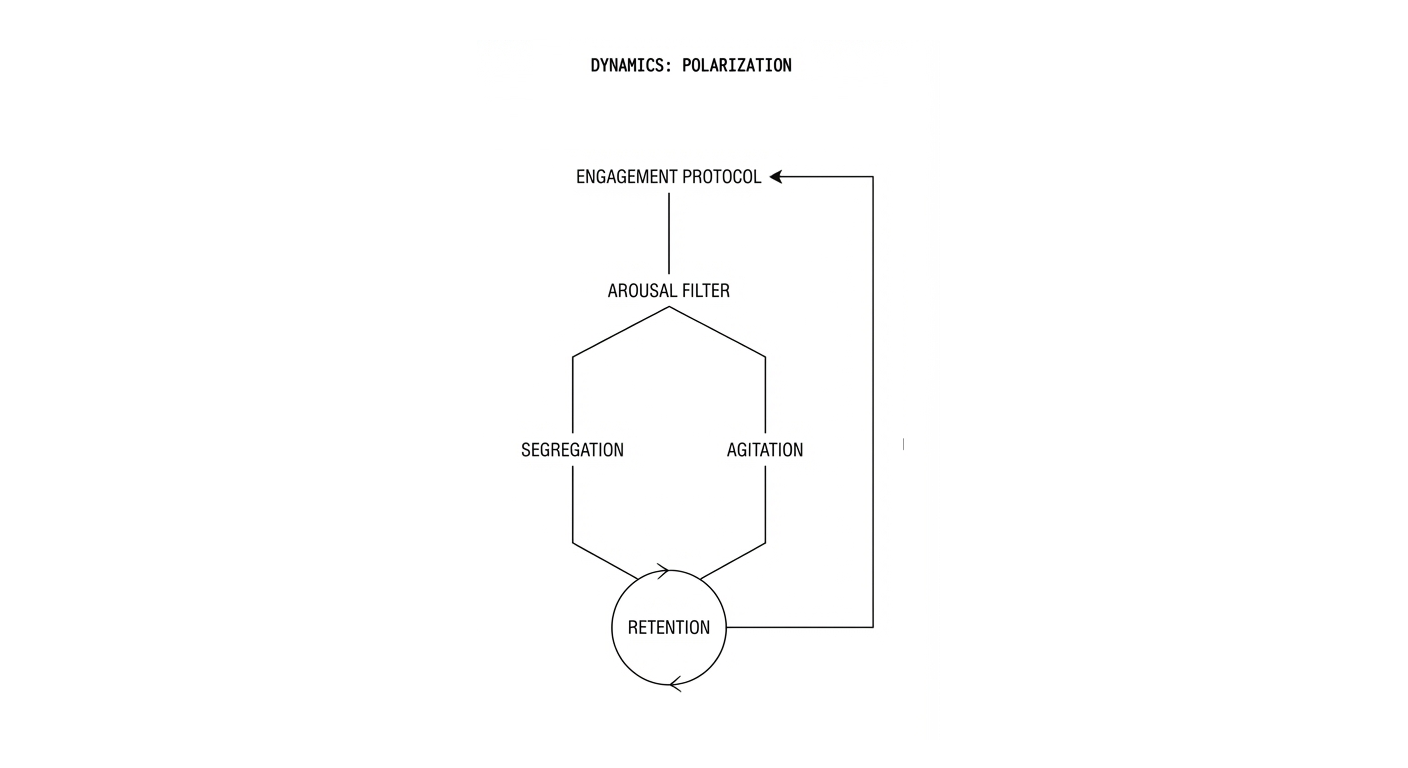
Indignation functions as a high-liquidity asset in the attention market.
Conclusion: Wrench in the Gears
The analysis shows that user behavior is a function of system architecture. Persistence of use does not necessarily indicate preference, but the effectiveness of conditioning.
Changing this state requires interventions at the design-parameter level:
- Transparency: Access to the logic of algorithmic weighting. De-algorithmize.
- Friction: Mandatory introduction of latency into decision or continuous-consumption flows.
- Integrity by Design: Protection against non-consensual cognitive-extraction techniques.
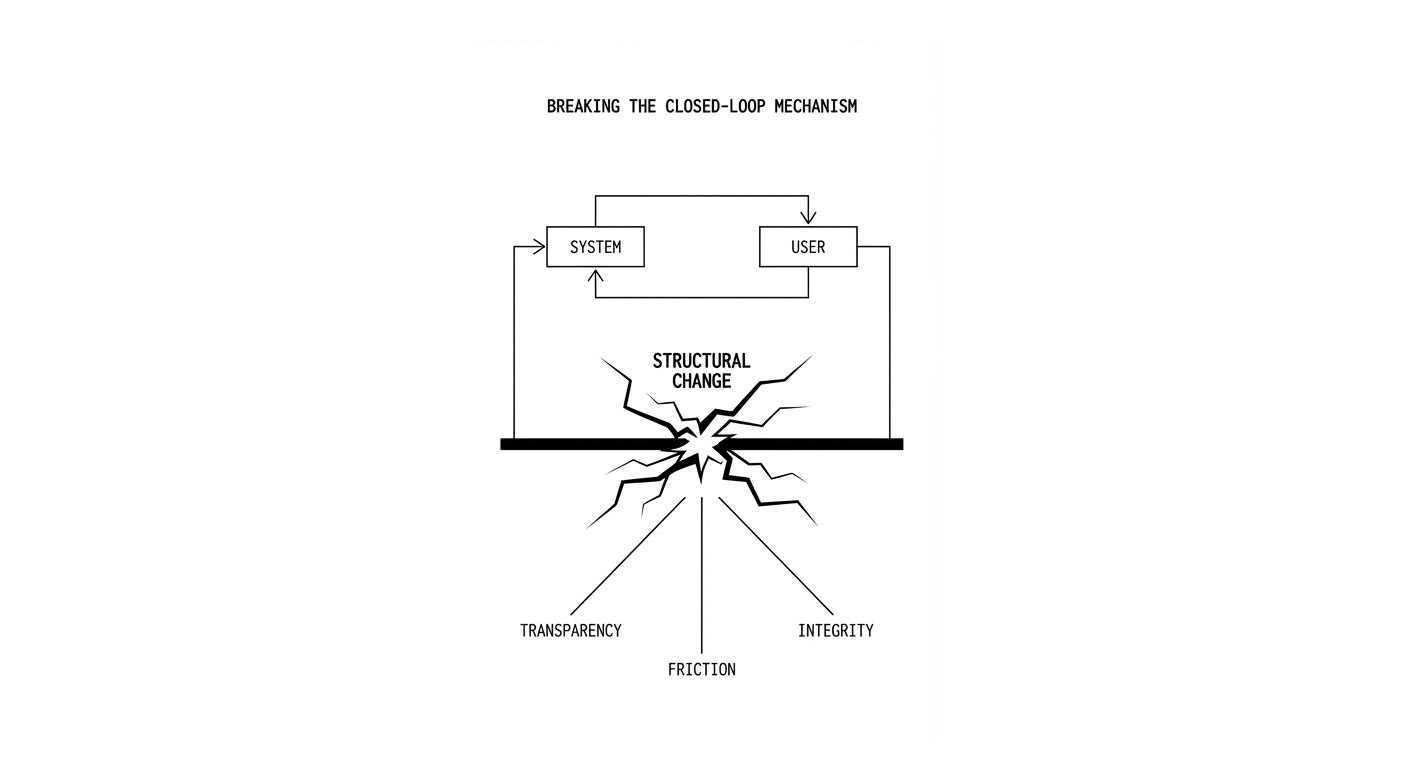
Absent structural change, the system continues to operate as a closed-loop mechanism optimized to convert human time and behaviour into signal.